
open space

Occupied

Jesus said, “When an impure spirit comes out of a person, it goes through arid places seeking rest and does not find it. Then it says, ‘I will return to the house I left.’ When it arrives, it finds the house unoccupied, swept clean and put in order. Then it goes and takes with it seven other spirits more wicked than itself, and they go in and live there. And the final condition of that person is worse than the first. That is how it will be with this wicked generation.” Matthew 12:43-45

I have a fire pit at the back of My yard that hasn’t gotten much use in the last year or so. A stand of bamboo moved in and took over the space.  I tried cutting the stalks back to the ground, but it only made the invasion move faster. Since Bamboo spreads through underground runners called rhizomes, Removing the visible part above ground actually backfires by concentrating the growing energy to the mass hiding underground. To reclaim the space, the rhizome network must be ripped out, and it does not give up its ground easily. 


I had to dig down into the earth with my fingers, grab hold of the thick, rootlike web and pull.  Sometimes a satisfying tug would pull up as much as six feet of rhizome, as if unzipping it from the earth. Sometimes I had to painstakingly remove it inches at a time. I spent a full day ripping out the weeds to reclaim the space.


I emerged soaked and dirty, but satisfied to look around and see open space where the woody grasses had been.


One thing I’ve learned since I started paying attention to plants is that they grow where there is empty space to grow. If I clear a space, something will move in and cover it. Mother nature doesn’t like to be naked. (Neither do kitchen counters apparently, btw.)


Matthew recorded an ominous statement Jesus made to religious leaders who were trying to prevent his work: “When an impure spirit comes out of a person, it goes through arid places seeking rest and does not find it. Then it says, ‘I will return to the house I left.’ When it arrives, it finds the house unoccupied, swept clean and put in order. Then it goes and takes with it seven other spirits more wicked than itself, and they go in and live there. And the final condition of that person is worse than the first. That is how it will be with this wicked generation.” Matthew 12:43-45


This passage has bothered me. The house was swept clean. Everything was in order. Now it’s a mess again. Something harmful was removed. Now it’s worse. Why try?


Looking at it today, after hours spent ripping out weeds, I wonder if the key word in this passage is “unoccupied.”  The evil spirit went roaming around looking for a place to rest. It returned to the house and found it unoccupied. There was empty space available to move in.


If I return my attention to my backyard clearing, the reason the weeds grew in the first place was because the space was unoccupied and neglected. Step one was getting the weeds out. Now there is unoccupied space once again, waiting for something to fill it. Whether that thing is beneficial or harmful is to be determined. 


I have choices. Neglect is an option. If I leave the space unoccupied for another year, never gathering friends or family around the firepit for s’mores and conversation, chances are good that next year I will find myself ripping bamboo out again. This will be hard work.


Another option is purposeful care. This will also be hard work, but probably a more beautiful outcome. In my cleared and prepped space, I can plant things that are good, lovely, and fruit-bearing. They can be placed according to an intentional design so that as they grow, they fill the space creating a pleasing and productive environment. I can nurture and care for these plants to keep them thriving. I can consistently use and maintain walking paths and open spaces. I can invite someone I love to enjoy it. 


Let me take a short tangent. There is a movement afoot called minimalism. In a hyper-consumerist, performance-obsessed culture that feels too loud, too busy, and too boxed in, minimalism suggests an alternate path. The minimalism movement invites us to clear out clutter and resist the relentless push to do and acquire more and more. This concept has been helpful to me, like pulling weeds. Removing things that clutter my physical and mental space gives me open space to breathe and look around. 


Minimalist practice has been life-giving to me; let me not get rid of open spaces! 


But today, I am thinking about a difference between open space and the “unoccupied” space Jesus described in Matthew 12:44. 


Let me realize that open space invites something to occupy it. If I leave an open space unoccupied and neglected, it doesn’t stay empty. Something nefarious will certainly move in.  Alternatively, If I invite goodness into open space, it can be occupied by the breath and life of the Divine. In an open, God-filled space, I can be still and know that God is good. 


Let me pay attention to the open spaces, welcome the Spirit of God into them, protect them from what is harmful, and nurture what is good into abundance.

An invitation to consider

  • Ask God for eyes to see and a heart to receive what He has for you today.
  • Consider your mental, spiritual, and physical space. Draw a mental picture of the garden of your heart as it exists today.
  • Are there weeds in your life that need to be removed? Have you been pulling out the visible part of a weed without attending to the underground root?
  • Or, is there an empty, unoccupied space? If so, pay attention! This is space that is ready for the Divine if you’ll allow it. 
  • Imagine the garden of your heart becoming a beautiful, flourishing place. What seeds do you want to plant there for this garden to come to life? Look for them and you will find them. Once you find them, plant them purposefully. Now, attend to them carefully, consistently, with love, believing steadfastly that God will cause them to grow.


May the Lord bless you and keep you. May He make his face shine upon you and be gracious to you. May the Lord turn his face toward you and give you peace.
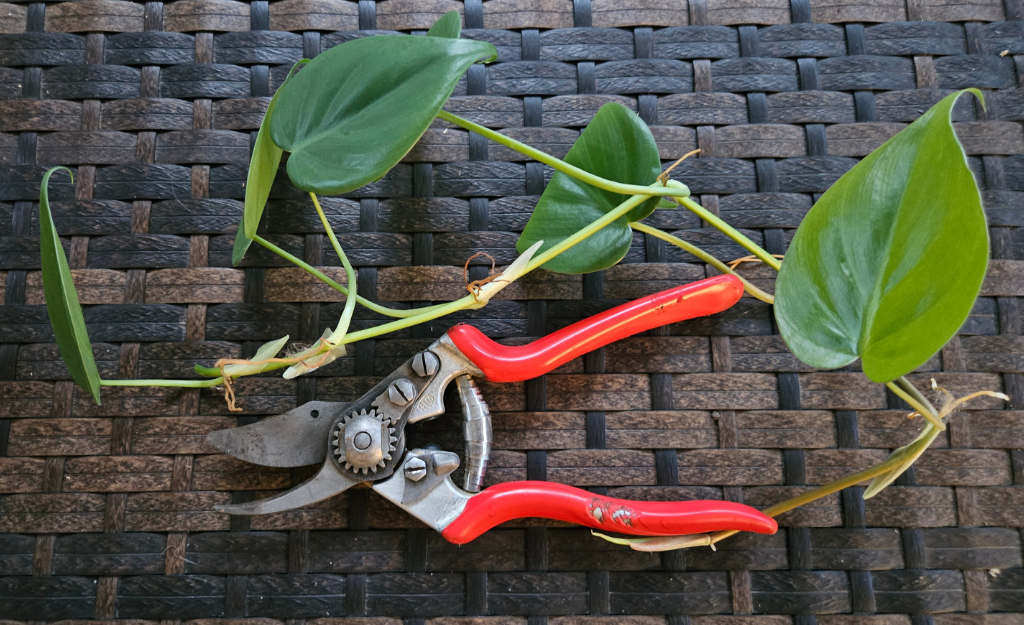

pruner with pathos clipping

Pruning from the Plant’s perspective

“Jesus said, ‘I am the true vine, and my Father is the gardener. He cuts off every branch in me that bears no fruit, while every branch that does bear fruit he prunes so that it will be even more fruitful.’” John 15:1-2

My backyard garden is in its fourth year, and I have pruned back a number of trees and plants at this point. It’s still hard for me to do. The idea of cutting back my precious botanical babies is dreadful. I’ve invested a lot – physically, emotionally, financially, chronologically – into helping these little darlings grow up from a seed to a seedling to a full fledged plant. Now I need to cut back that hard-earned growth? It’s a lot to ask.


Yet, experienced gardeners understand that a disciplined approach to pruning is beneficial. Pruning discourages the plant from growing in inappropriate ways, while it encourages healthy, fruitful growth.  


Before we go further, let’s define pruning. Pruning is the process of intentionally removing a part of a living plant. 


Jesus used a pruning metaphor to help us understand how God shapes the growth of the living things he cares for. In John 15:1-2, He described his Father as the gardener who does the pruning; himself as the source of life who submits to being pruned; and his disciples as the branches to whom the pruning cuts are applied. If I believe Jesus, I should expect to be pruned – no question. If there is a question to be asked, perhaps it is whether I can receive the pruning in faith that the result will ultimately be more vibrance and fruitfulness.


Why is pruning necessary? Because life is not free. The process of living takes energy, and the individual has a limited amount of it available. When a skilled gardener removes part of a plant, she or he is concentrating that energy toward its most beneficial use. 


One reason we prune a plant is to remove disease or damage. If diseased parts are left on the plant, they draw energy away from healthy growth, stunting the fruitfulness of the plant as a whole. 


Pruning to remove disease makes sense. Even so, in my own garden I have struggled to make the necessary cuts to plants I care for. Last year, I had a cucumber plant whose leaves became afflicted with mildew. I was afraid that cutting off the part that was making the plant sick would kill it. I hoped it might recover if I just let it be. Any experienced gardener will tell you, this is a false hope. The mildew will spread, and the entire plant will succumb to it. Sadly, that was in fact the fate of my beloved cucumber, may she rest in peace. The takeaway – the disease must be removed, and the sooner the better.


The gospel of Matthew records a challenging message from Jesus to his disciples related to pruning: “If your hand or your foot causes you to sin, cut it off and throw it away. It is better for you to enter life crippled or lame than to have two hands and two feet and be thrown into the eternal fire. And if your eye causes you to sin, gouge it out and throw it away. It is better for you to enter life with one eye than to have two eyes and be thrown into the fire of hell.” Matthew 18, 8-9. 


What I hear from Jesus’ teaching is that it will be both excruciating and inconvenient to remove what is sucking energy away from the life God has designed for us. At the same time, Jesus also said that he came so that we might have life and have it to the full. If I believe this, then I would be wise to welcome pruning in faith that it will result in a better and more flourishing life, even if the process is painful before it is beautiful.


I notice that Jesus tells his disciples to do their own pruning: if it’s pulling you away from God, “[you] cut it off, [you] gouge it out.”  How often do I coddle the diseased parts of myself (investing even more energy) instead of removing them and channeling my limited energy into the life God designed?


It seems that it is God’s desire for us to use our own discernment and agency to prune off what hinders us. I feel it needs to be said that with pruning, precision matters. Master gardeners take the time to know exactly what they are cutting, where to make the cut, and why. In some of my early pruning efforts, I would fire up a hedge trimmer and indiscriminately raze down a section of an overgrown shrub. This is not a skillful technique. The process should be done deliberately and carefully. 


John 15 seems to suggest that in cases where we can’t or won’t do the pruning ourselves, God will. Whether that is a comforting or distressing thought depends on whether I trust the divine Gardener more than I love being comfortable.


For me lately, the pruning seems to be targeted at my ego. The ways that I try to reach toward things that make me feel important, admired, useful, and validated are being trimmed. It’s been painful. Very. But, I am starting to see new growth. I notice a slow but perceptible shift in my attention and energy away from fearfulness and the striving for approval that has kept me stunted. I notice a slow but perceptible shift toward openness, curiosity, and acceptance of myself and others. 


The scripture tells me it’s not just the diseased parts that are to be cut off, though. John 15:2 says “every branch that does bear fruit he prunes so that it will be even more fruitful.” For many fruiting and flowering plants, skilled gardeners prune back perfectly healthy parts of the plant. It seems counter-intuitive, but cutting back healthy plants focuses energy into producing better fruit or more abundant blooms.  


As I write this, I’ve just finished re-reading the book of Job. Job is a quintessential poem that grapples with how it can be that a good God allows his loved ones to suffer. In the poem, Job, a good man, is living a blessed existence with material wealth, a happy family, and an honored position in his community. Suddenly he loses all his material possessions, his children are killed, and his body is subjected to agonizing sores. In the poem, God gives explicit consent to all this, meanwhile Job’s friends respond by unjustly attacking his integrity, nearly the last thing he has left. Oof. 


HortGuide shares this advice about pruning grape vines: “You are going to remove roughly 90 percent of last year’s growth. That is not a typo, and it is not aggressive. An unpruned grape vine will produce dozens of small, flavorless clusters on weak wood while shading out the buds that would have given you fewer, better grapes next season. Pruning is how you direct the vine’s energy to the wood that actually fruits.”


At the end of the book of Job, God speaks directly to Job for the first time. Overcome with awe at hearing the words of the Creator, Job finally lets go of the remaining shreds of his ego. After this final pruning cut, we read that Job’s life bursts into bloom anew, more abundant than before. 


Let me be utterly convinced that the Gardener is trustworthy. Let me be ready to accept the removal of anything that draws energy away from His good design. Let me hold every good thing in my life gently, not clutching and gasping, but with gratitude and an open hand. Let me cling firmly to faith that if God removes it, something better will grow.

An invitation to consider

  • Ask God for eyes to see and a heart to receive what He has for you today.
  • Be still, breathe slowly, and consider that each breath is a gift from God. Take a moment to feel gratitude for the gift of life.

  • What is receiving your energy today? Is it fruitful? 

  • Think back to a time in the not distant past, maybe a year or three years ago. What was receiving your energy then? Was it more or less fruitful than today?
  • Is God prompting you to respond or take action in some way?

May the Lord bless you and keep you. May He make his face shine upon you and be gracious to you. May the Lord turn his face toward you and give you peace.

sunflower following the sun

Following the Sun

“Look to the Lord and his strength; seek his face always.” 1 Chronicles 16:11


Sunflowers are famous for their sun-following behavior.  


The flower starts the day with its bloom facing east. As the sun travels across the sky from east to west, the flower tilts its head in sync so the bloom continually faces the position of the sun. At the end of the afternoon, the flower faces west. The scientific name for this behavior is heliotropism. 


At night when the sun’s warming light is hidden, the sunflower makes a poignant display that looks to me like faith and worship. In the darkest part of the night, the sunflower lifts its leaves and turns its face toward the east. No light has yet appeared, but the sunflower anticipates the sun and places itself in position to be ready to receive the first rays at dawn.


Here is a time lapse video that shows sunflowers following and anticipating the sun.


Interestingly, a sunflower grown under a static grow light keeps its face pointed toward the unmoving light. The flower seems to remember what the light source has done in the past and anticipate that it will do the same thing in the future.


There’s the obvious and beautiful metaphor: Being designed to receive delight from God, I demonstrate my faith and hope in Him by turning toward Him. Like the sunflower to the sun, I can attune myself so closely to God that every day – every moment of every day – I shift to align with Him. I can anticipate His goodness in the dark moments and point myself toward where I can expect His light to appear. In this way, I am positioned to receive his blessing.


James 1:17 says “Every good and perfect gift is from above, coming down from the Father of the heavenly lights, who does not change like shifting shadows.”


Something else occurred to me as I was thinking about the mechanics of heliotropism. To the sunflower, it looks like the sun is moving across the sky and the flower must move to follow it. 


It’s true the flower must move so that it can properly orient itself and continually face the sun.  


But the sun didn’t move. 


It is the spinning of the world around the sunflower that causes its orientation to the sun to change. 


At first, I feel I should be mad at the world for changing. It means I need to move in order to orient myself toward my source of life and light.  It’s not just about me and God. It’s about me and God and the world. But what if we don’t have to be mad at the world about this? 


What if this is also part of God’s good design? 


The world is in motion.  We are on a journey. It is our life’s work to remember God’s goodness to us in the past; to follow His goodness today; and, in the darkness, to turn toward the direction we believe His goodness will appear in the future.

An invitation to consider

  • Ask God for eyes to see and a heart to receive what He has for you today.
  • See if you can attune yourself to God and orient your face toward Him.
  • Do you need to move your body, mind, or spirit?
  • Is God showing you something about himself or about your relationship with Him?

May the Lord bless you and keep you. May He make his face shine upon you and be gracious to you. May the Lord turn his face toward you and give you peace.